PREMIUM 1.1ML VOLUME OVDS
Ophteis is a complete OVD family designed for every surgical approach, from space creation to endothelial cell protection and all-stage versatility. Built for consistent performance, the OVD family combines reliability, simplicity and quality.
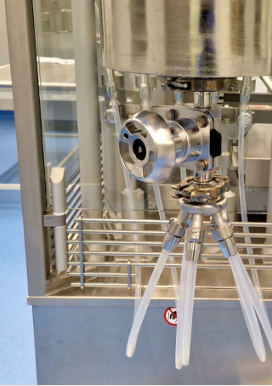
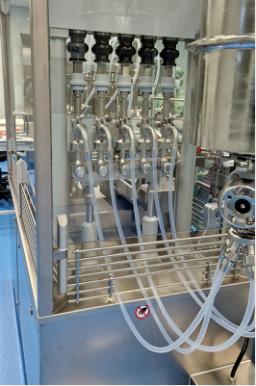
Manufactured in Europe at Rayner's state-of-the-art biomaterials facility, Ophteis offers a dependable supply, practical room temperature storage and a generous 1.1 ml syringe fill volume.

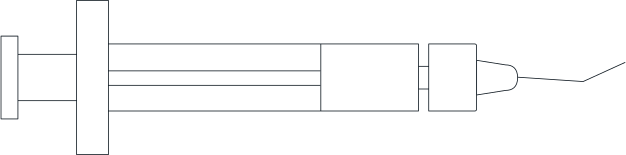
Every Ophteis OVD is supplied in a generous 1.1 ml filled syringe

Ophteis OVDs can be stored at room temperature

Fully owned manufacturing process
BUILD SPACE & MAINTAIN CONTROL
Ophteis is a complete OVD family designed for every surgical approach, from space creation to endothelial cell protection and all-stage versatility. Built for consistent performance, the OVD family combines reliability, simplicity and quality. Manufactured in Europe at Rayner's state-of-the-art biomaterials facility, Ophteis offers a dependable supply, practical room temperature storage and a generous 1.1 ml syringe fill volume.
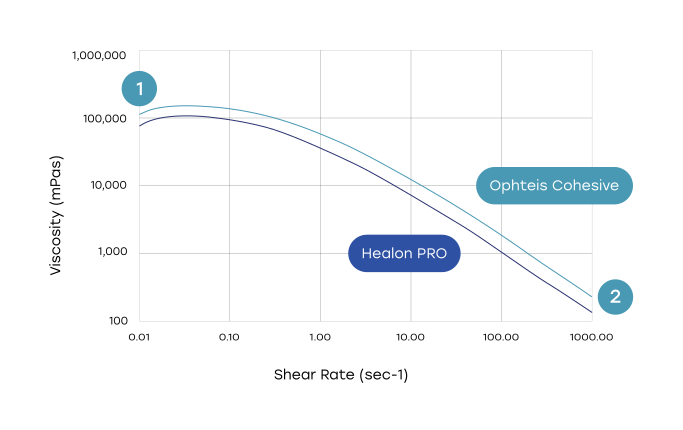
Ophteis Cohesive’s high molecular weight enables the creation of a deep and stable anterior chamber that facilitates a controlled capsulorhexis, confident phacoemulsification and smooth IOL implantation. High viscosity helps to ensure the OVD maintains its integrity inside the eye, supporting efficient instrument manoeuvring while preserving working space.
At the end of the surgery, the highly cohesive nature of Ophteis Cohesive is designed to enable rapid and controlled removal, reducing the likelihood of any residual material, as well as supporting predictable postoperative pressure management.
For enhanced precision at every stage, Ophteis Cohesive’s high transparency helps ensure an unobstructed surgical view throughout the procedure.

ADAPT & PROTECT
Ophteis Adaptive PRO is designed for surgeons who require versatility and protection throughout the procedure.
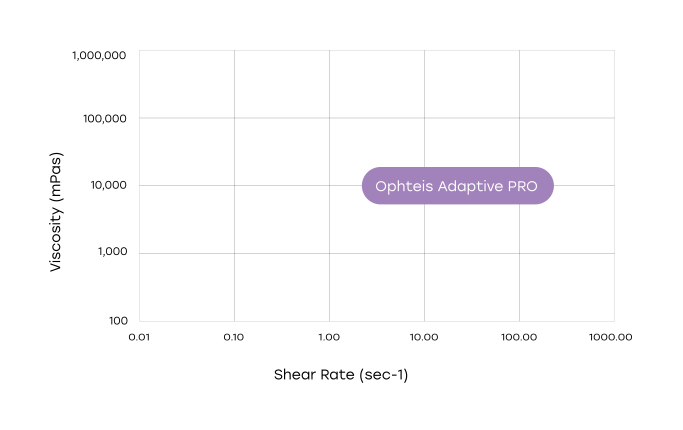
Based on advanced rheological technology, Ophteis Adaptive PRO combines chamber stability with sustained endothelial cell protection, reducing the need to switch between multiple OVDs for most cases.
Ophteis Adaptive PRO’s high viscosity supports reliable anterior chamber maintenance during the capsulorhexis and phacoemulsification, while maintaining predictable handling characteristics during IOL implantation.
The visco-adaptive nature of the OVD flows smoothly during injection, remains stable when needed and can be removed in a controlled manner at the end of surgery.
In addition to its reliable mechanical performance, Ophteis Adaptive PRO contains 4% sorbitol, a free-radical scavenger designed to help neutralise reactive oxygen species generated during phacoemulsification.
By addressing oxidative stress as well as mechanical trauma, it offers an added dimension of intraoperative endothelial protection.

Ophteis Adaptive PRO with sorbitol is proven to:
Sorbitol is naturally found in aqueous humour, where it acts as a key corneal nutrient. It is a stable, non-reactive molecule that lends two additional free radical scavenging molecules to every sodium hyaluronate (NaHa) chain, making it a perfect free radical scavenger to maximise endothelial cell protection.

An in-vitro laboratory study carried out at the University of Brighton (UK) in collaboration with Prof Steve Arshinoff showed that during three-second phaco exposure, Ophteis FR Pro (now Ophteis Adaptive PRO) demonstrated greater overall average cell viability (28.4%) compared to the three tested market-leading OVDs.
Figure 1. 3T3 Cellular viability post 3 second ultrasound time: 3T3 Cells were exposed to 3 second total ultrasound time at 60% power in linear chop mode. Cell viability was quantified using MTS assay. Ophteis FR Pro (now Ophteis Adaptive PRO) provided the greatest level of cell protection, significantly greater than Healon, OcuCoat and BSS.
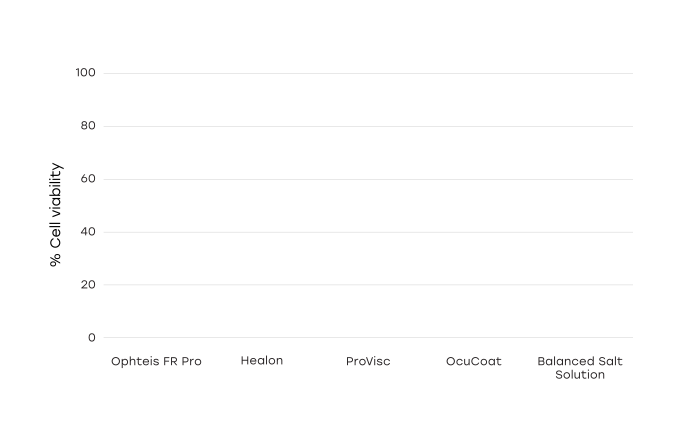


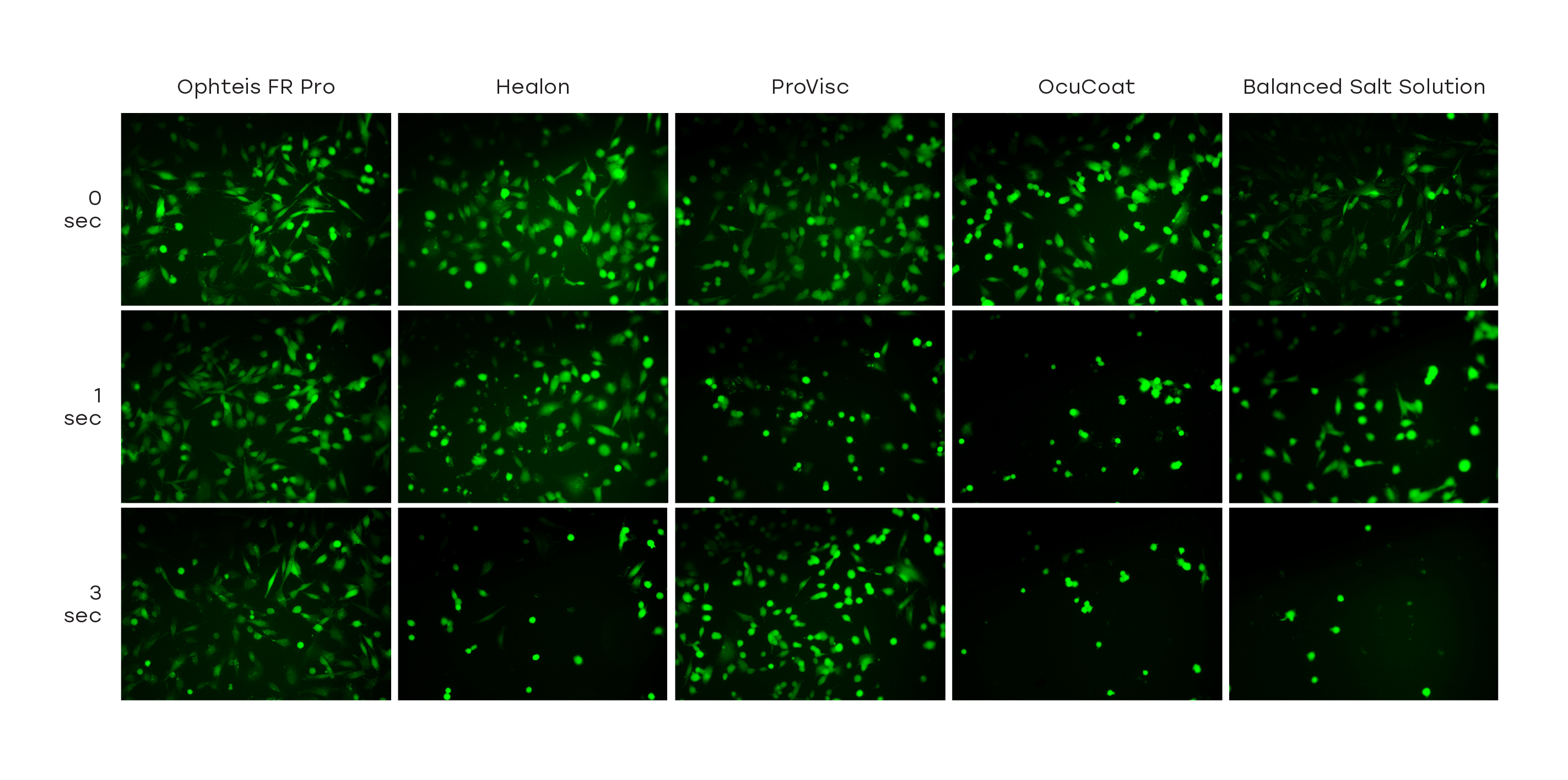
Figure 2. 3T3 Cellular viability post 0, 1 & 3 second ultrasound time: Cell viability and morphology were visually assessed using Calcein-AM staining. The results closely match that of the MTS assay supporting the quantitative analysis findings.
Ophteis FR Pro (now Ophteis Adaptive PRO) provided the best level of cellular morphological protection following all exposures, with typical healthy spread fibroblastic form. All other OVDs presented with spherical or reduced morphology.
Ophteis Adaptive PRO was previously Ophteis FR Pro.
COAT & PROTECT
Ophteis Dispersive is designed to maximise endothelial coating and protection during surgery.
Ophteis Dispersive provides reassurance during procedures with vulnerable corneas or that require increased phaco energy.
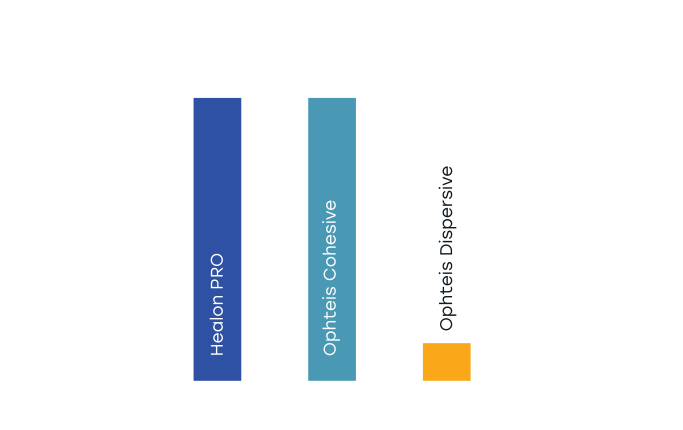
Formulated with a low molecular weight and high concentration of sodium hyaluronate (NaHA), Ophteis Dispersive spreads effectively across intraocular tissues, forming a protective layer over the endothelium. Its dispersive properties allow it to remain well distributed inside the eye, resisting aspiration and maintaining coverage during phacoemulsification.
At the same time, Ophteis Dispersive contributes to adequate anterior chamber maintenance,with a high level of transparency so that visibility is not compromised, allowing surgeons to work with confidence and precision.

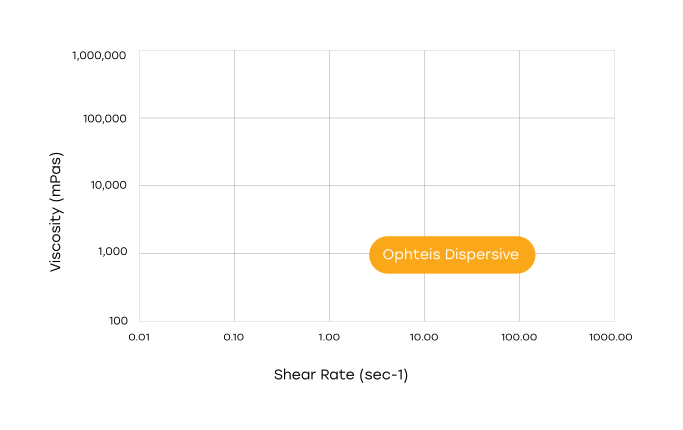

Ophteis Dispersive was previously OphteisBIO 3.0%
Every Ophteis OVD is supplied in a generous 1.1 ml filled syringe
This increased fill volume supports your full procedure without compromise, reducing the risk of running short at a critical stage and minimising the need to open an additional syringe. The result is an uninterrupted workflow, reduced waste and greater peace of mind.
Ophteis 1.1ml
volume
Other OVDs
0.85-1.0ml
Ophteis OVDs can be stored at room temperature
By removing the need for refrigerated storage and subsequent temperature acclimatisation before surgery, Ophteis OVDs are ready when you are - reducing operational complexity and streamlining preparation for clinical teams.
Room temperature
storage from 2-25°C
Other OVDs require
2-8°C refrigeration
Fully owned manufacturing process
Rayner maintains complete control over its OVD production and quality assurance. This in-house capability ensures consistent rheological performance and a dependable supply chain - giving surgeons confidence not only in the OVD, but also in its availability.
An OVD portfolio designed to simplify surgery and support consistent performance, case after case.

*Rayner 2026, data on file.
All trademarks are property of their respective owners.